Updated
7 min read



Imagine you’re ready to take on your financial tasks, coffee in hand, ready to reconcile accounts or run payroll, and QuickBooks throws a wrench in your plans with Error 6189, 816 or Error 6190, 816. What a hassle, right? Errors like these are like unexpected traffic jams on your productivity highway. QuickBooks often fails to open or sync the company file stored on a multi-user network when both errors occur. The hiccups can be caused by mismatches between transactions and log files, file corruption, or improper hosting configurations.
You will encounter the following error message: “The message: An error occurred when QuickBooks tried to access the company file (6189, 816 or 6190, 816) there’s an issue with your multi-user network, not with your data file.”

But don’t worry! These errors may sound complicated, but they are easier to fix than you think. In this article, we’ll highlight the common causes, troubleshooting methods, and prevention tips to minimize the scope of this error. Let’s get started and get QuickBooks back on track!
In order to minimize the impact of this error, one should always stay aware of the warning signs that try to indicate that something is or is about to happen with the software. There may be several signs associated with QuickBooks Errors 6189, 816 and 6190, 816:

It is imperative to recognize these symptoms as the first step toward resolving the issue and getting QuickBooks back on track.
Get Back to Work with a Quick Fix!
Facing QuickBooks Error 6189, 816 or 6190, 816? Follow the solutions above or reach out to us for expert support. We're ready to help you resolve the issue fast!
Multi-user setups typically cause QuickBooks errors 6189, 816 and 6190, 816 to occur when accessing the company file is denied. The following are the main causes of these errors:

Identifying these causes can help pinpoint the problem, resulting in a faster resolution! Now let us highlight the best possible solutions to get rid of this error.
QuickBooks errors 6189, 816 and 6190, 816 usually indicate a network problem rather than a corrupted file. We’ve got you covered if you’re stuck and unsure of how to proceed. In this section, we’ll walk you through the steps to fix these errors and get QuickBooks running smoothly once again.

Tip: To find the icon, search for QuickBooks Tool Hub in Windows.
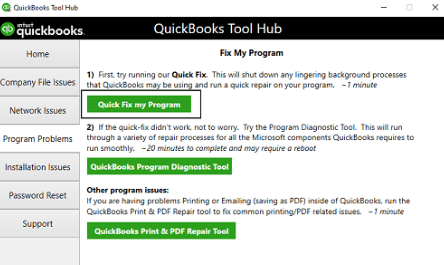
If you still see the error, try solution 2.
Important: If you are using QuickBooks Enterprise Hosting instead of a server computer, contact us so we can help you restart the service. If your company files are hosted through an Intuit Hosting Provider or another online service, contact them for assistance.
You need to do the following:
If QuickBooks opens without any issues, you’re good to go. Proceed to Solution 3 if Error 6189, 816 or 6190, 816 persists.

Move your company file (.QBW) to your local hard drive if you access it from a removable or online drive.
Important Best Practices:
The QuickBooks errors 6189, 816 and 6190, 816 can be frustrating, especially if they disrupt your workflow and prevent you from accessing company files. By following the troubleshooting solutions outlined above, you can easily resolve these issues and restore smooth operation to your multi-user network. Whether it’s file mismatches, network settings, firewall configurations, or outdated versions, each fix will get you back on track.
To avoid future errors, it’s essential to store QuickBooks files on reliable, local hard drives and ensure proper server configurations. Maintaining your network setup and updating QuickBooks regularly will also keep things running smoothly. For further assistance, you can contact QuickBooks technical experts.
1. Check your Product Details.
2. Verify your Internet Connection.
3. Run QuickBooks as Administrator.
4. Temporarily Disable Antivirus/Firewall.
5. Clear QuickBooks Registration Information.
6. Use the QuickBooks Install Diagnostic Tool.
7. Re-register QuickBooks.
8. Verify Date and Time on your Computer.
9. Uninstall and Reinstall QuickBooks.
1. Use the QuickBooks Auto Data Recovery (ADR) Tool.
2. Use the Rebuild Data Tool.
3. Use the Verify Data Tool.
4. Restore from a Backup.
5. Manually copy the file to another location.
6. Use QuickBooks File Doctor.
1. Go to Edit > Preferences, select the category, and click Reset.
2. On the login screen, click I Forgot My Password and follow the prompts.
3. Go to File > Utilities > Rebuild Data, then Verify Data.
4. Close QuickBooks, delete the QuickBooks folder from C:\Users\YourUserName\AppData\Local\Intuit, and reopen QuickBooks.
5. Go to Control Panel > Uninstall a Program, uninstall QuickBooks, and then reinstall it.
External drives like USB flash drives are not designed for QuickBooks, and they may cause access issues.
To restart the QuickBooks Database Server Manager and resolve access issues, open the QuickBooks Tool Hub, select “Network Issues,” then click “QuickBooks Database Server Manager“.
About the author
Have a QuickBooks® question? Our ProAdvisors can help. QAsolved is not affiliated with Intuit.